A plaster belly cast: keeping the shape of nine months
When a baby arrives, everything turns towards them; the belly that carried them for nine months survives only in photographs. A plaster belly cast keeps that shape in three dimensions — an old craft mothers have rediscovered. The story of the cast we made in an İstanbul kitchen one Saturday morning while I was expecting Hamza Bera.
By Merve Çokal Doğan · · 4 min read
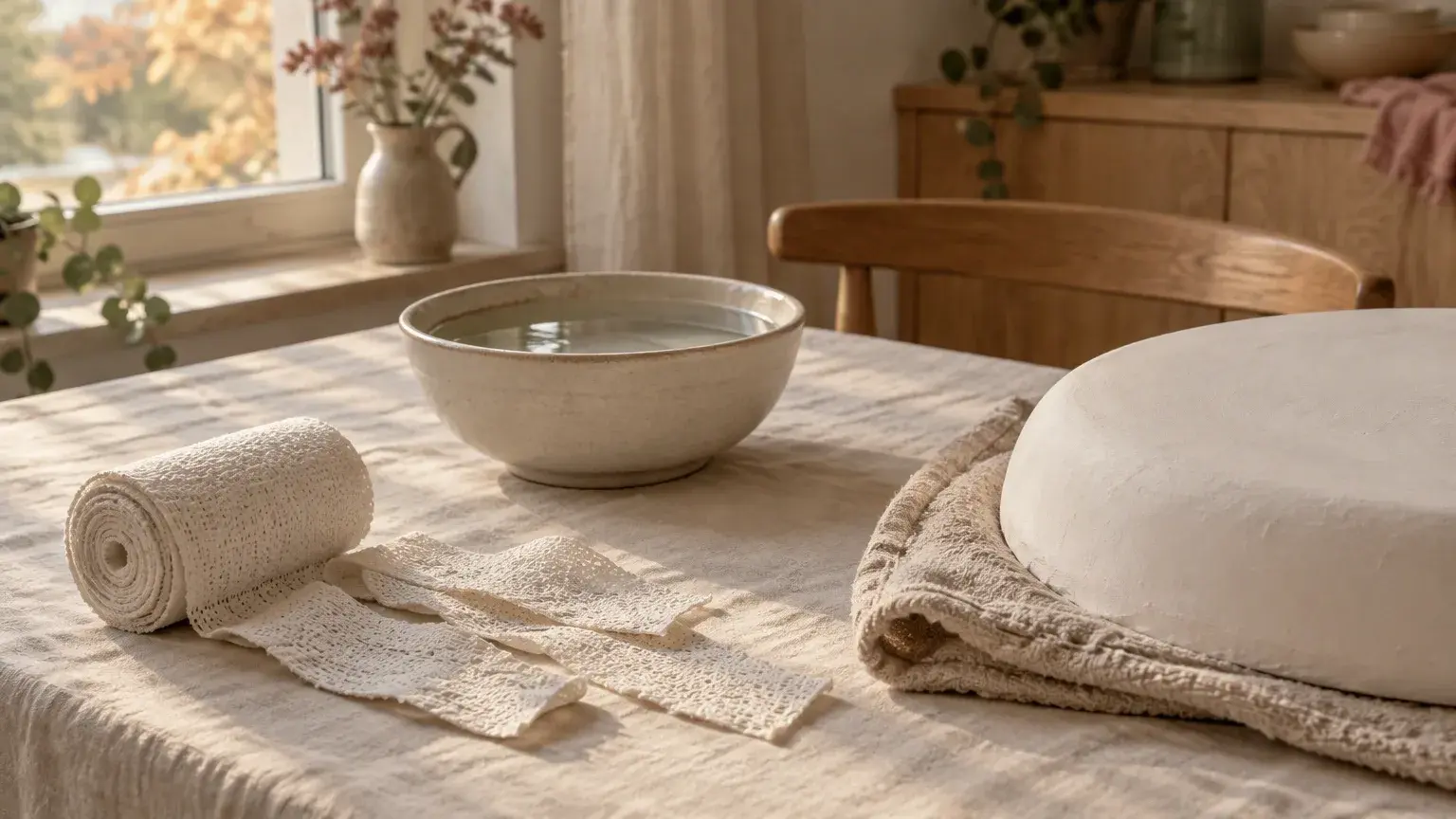
We had just moved to İstanbul when I was expecting Hamza Bera, and one morning a neighbour — an elderly lady — knocked on the door with a roll of plaster bandage in her hand. “Gelin hanım,” she said — the way older women here address a young wife — “have you had your belly cast?” I hadn’t; I didn’t know what one was. “Come, I’ll show you.” That Saturday morning, on a chair in the kitchen, warm plaster strips were laid over my belly.
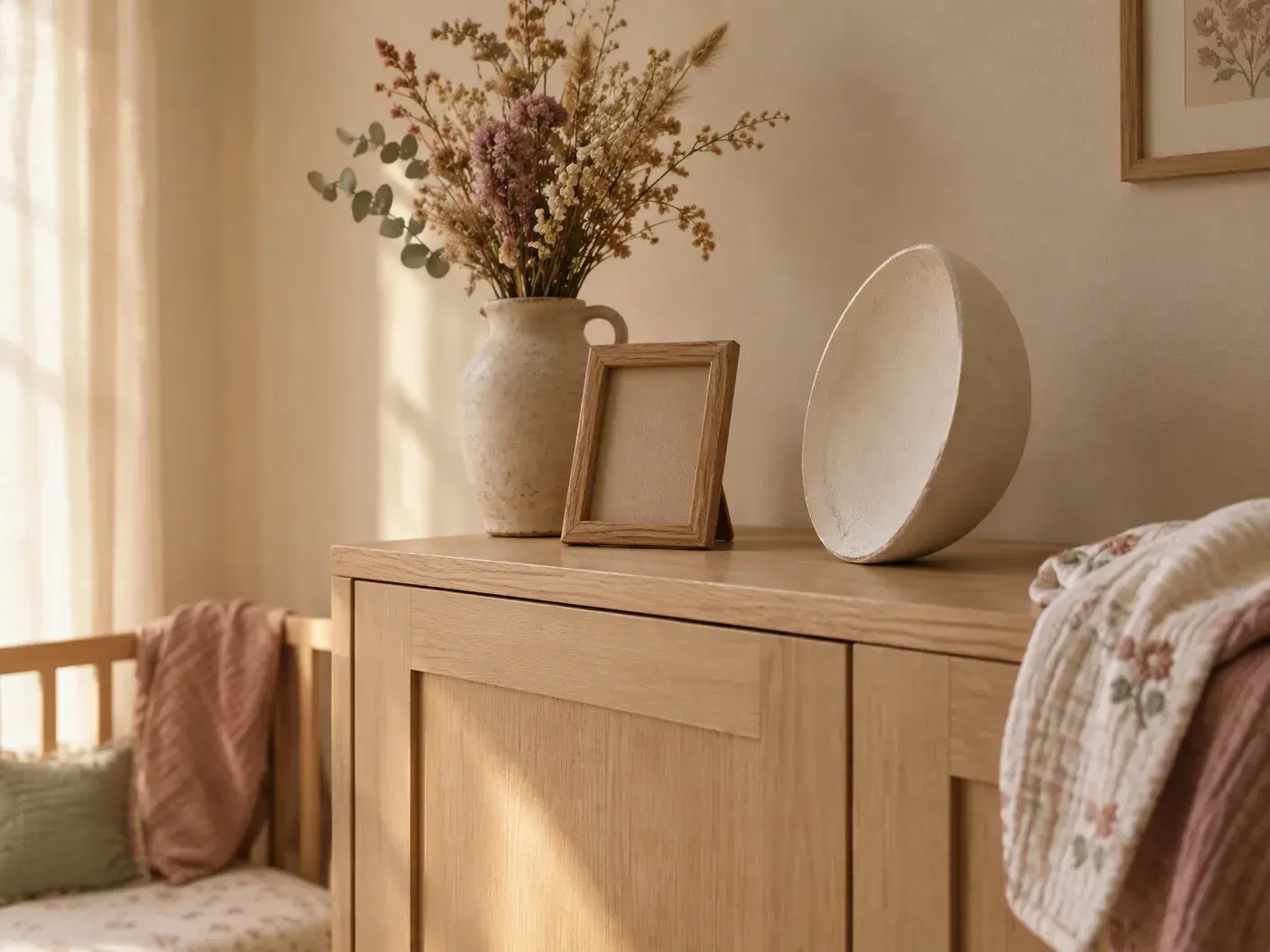
The cast still sits on top of the wardrobe in our bedroom. Hamza Bera looks at it and says, “I was in there.”
Why the belly gets forgotten
When a baby is born the world turns towards them, and rightly so. But the belly that carried them for nine months disappears a month after the birth as if it had never been. It survives in photographs — usually from the side, a little shy.
A plaster cast changes that. It keeps the shape of your belly, two or three weeks before the birth, in three dimensions. Then that shape goes on a shelf, and one day a child looks at it and sees how small a place they started in.
This isn’t a new fashion. Plaster has been used for hand- and footprints for generations, and for belly casts too; mothers have simply rediscovered it lately. I suspect that as photographs multiplied, things you can touch became worth more.
A Saturday in the kitchen
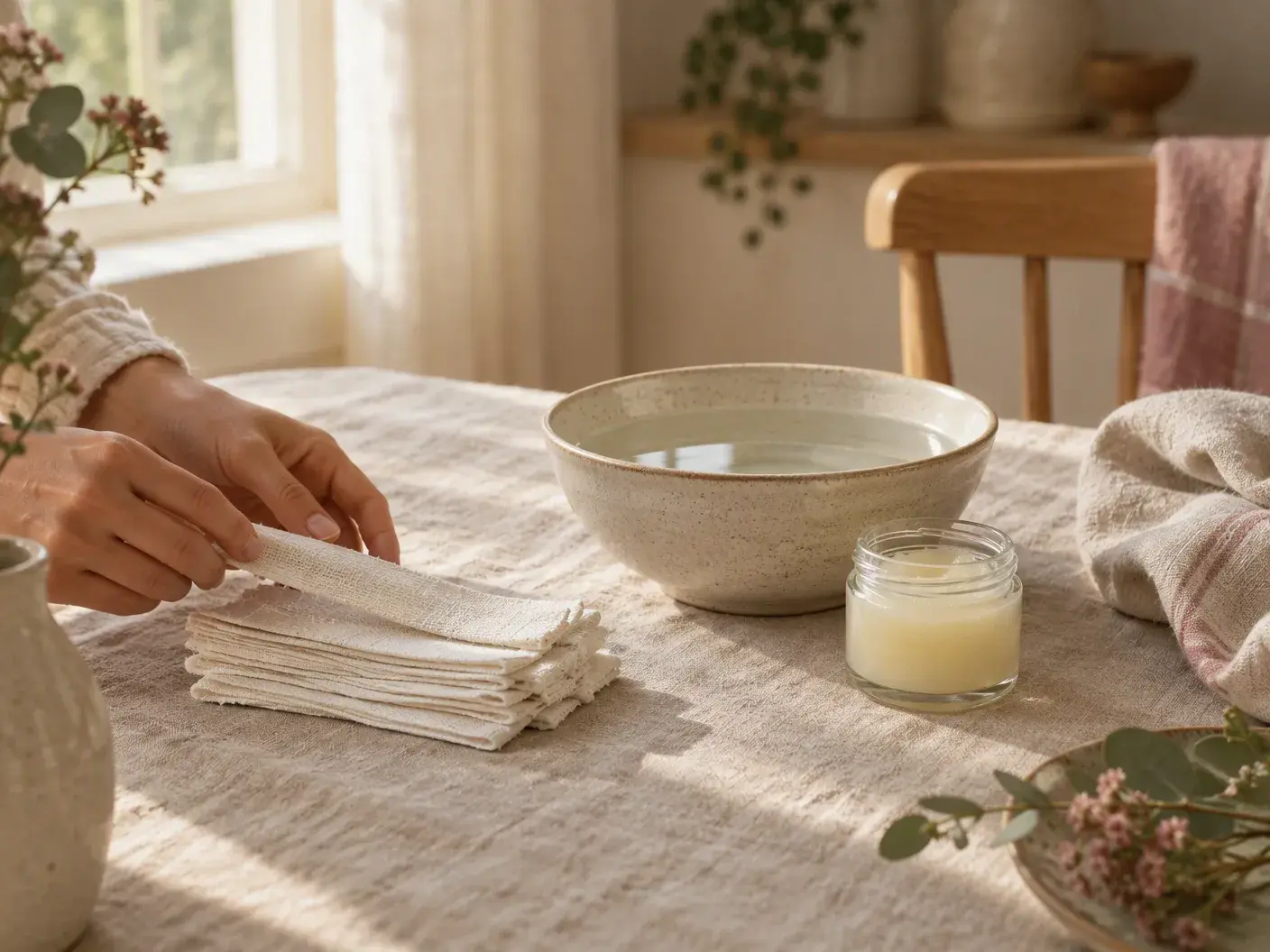
My neighbour was practised; the whole thing took half an hour. First a layer of petroleum jelly over my belly; then plaster bandage strips dipped in warm water and laid on one by one. Three layers. As the plaster set I felt a gentle warmth; the baby inside kicked, and she laughed: “He’s joining in.”
Twenty minutes later it had hardened, and she eased it off by the edges. In my hands was a white, smooth copy of my own belly. A strange thing — not heavy, warm, hollow. We set it by the window to dry.
When Abdullah came home he didn’t understand what it was. Then he did, and looked at it for a long time.
Sandpaper and colour
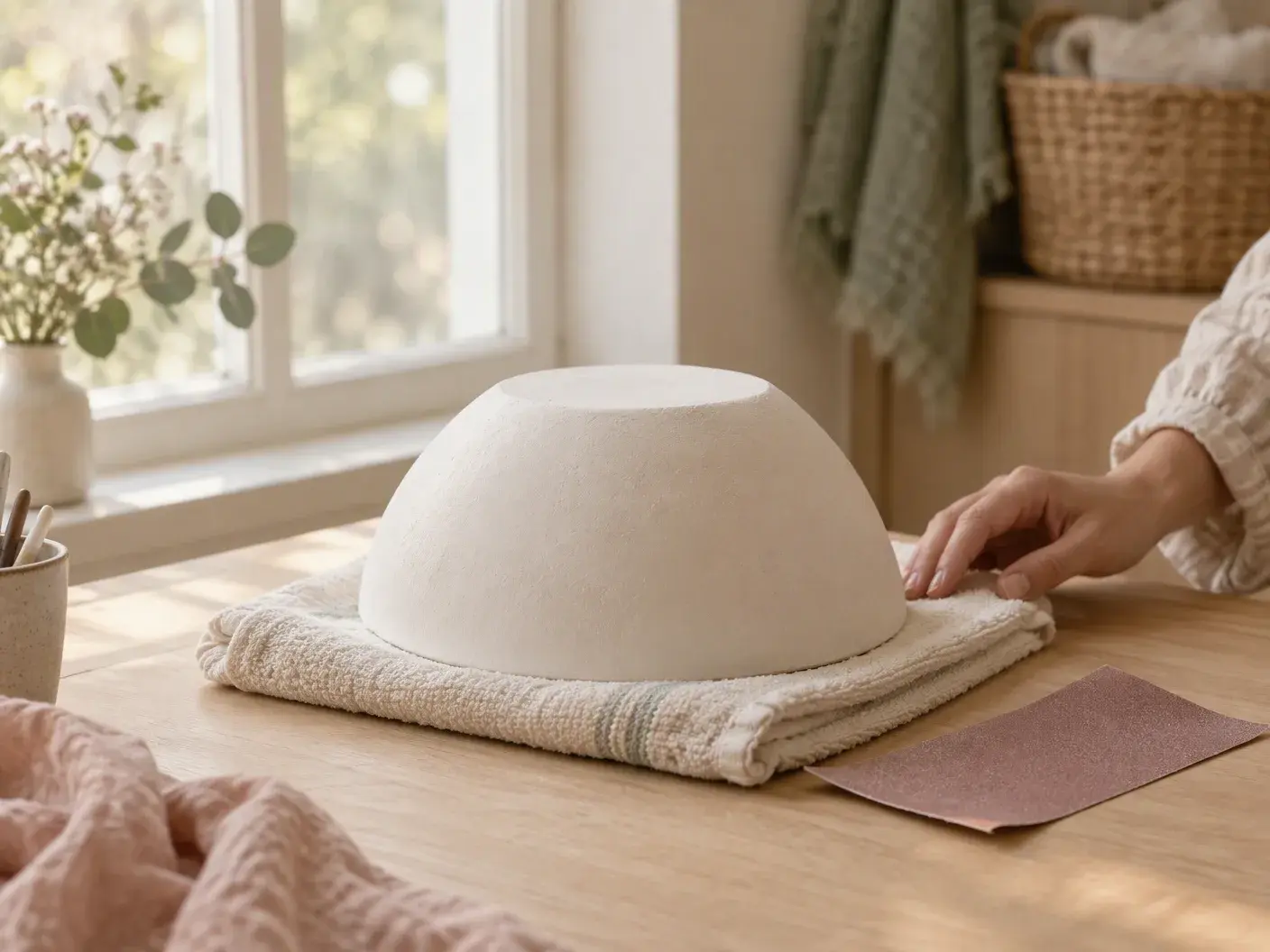
Once dry, we sanded the edges. Some people paint the cast, some cover it in paper, some write the baby’s birth details inside. I left mine as it was: white, a little rough, the rim slightly uneven. It looks more like me that way.
Inside, in pencil, I wrote only the date. And Hamza Bera’s name — except the name wasn’t settled then; what I wrote was a different one, and I crossed it out later. The crossing-out is still there.
How to do it at home
- Plaster bandage. From a pharmacy or a craft shop — sold as alçılı bandaj or modelling plaster tape. Three or four rolls are enough for one belly.
- Pick the moment. Two to three weeks before the due date: the belly at its roundest, the mother still comfortable. Ask your doctor; warm plaster is fine for most pregnancies, but asking is good.
- Petroleum jelly, generously. So neither skin nor fine hair sticks to the plaster. A little extra around the navel.
- Warm water, short strips. Cut the bandage into 20–30 cm lengths; dip each, squeeze, lay it on the belly, smooth with the palm. Three layers.
- Do it with someone. It cannot be done alone — partner, mother, neighbour. Without my neighbour mine would not exist. The cast keeps the caster too.
- Two days to dry. By a window, not in direct sun. Then fine sandpaper and, if you like, an acrylic primer.
Beside the belly, their print
The belly cast keeps the nine months. In the first weeks after the birth there is another shape worth keeping: the hand- and footprint taken at one week old. Side by side, the two complete the story — where they came from, and how.
Their name, on both shoes
Their name sits on both little shoes, ready to join the soft things you’ll remember.
The top of the wardrobe
My neighbour moved away a few years later; we lost touch. But that Saturday morning is still on top of the wardrobe. Every so often Hamza Bera takes the cast down, reads the crossed-out name, reads his own, looks at the date. “I was in there,” he says. He was.
— Merve Çokal Doğan
Questions from readers
Mothers ask, we answer — questions under this story that others may have too.
Ask your own question
Ask the author anything about this story. We send a one-time code to your WhatsApp so real mothers, not bots, get answered — your number is never shown.
Keep reading
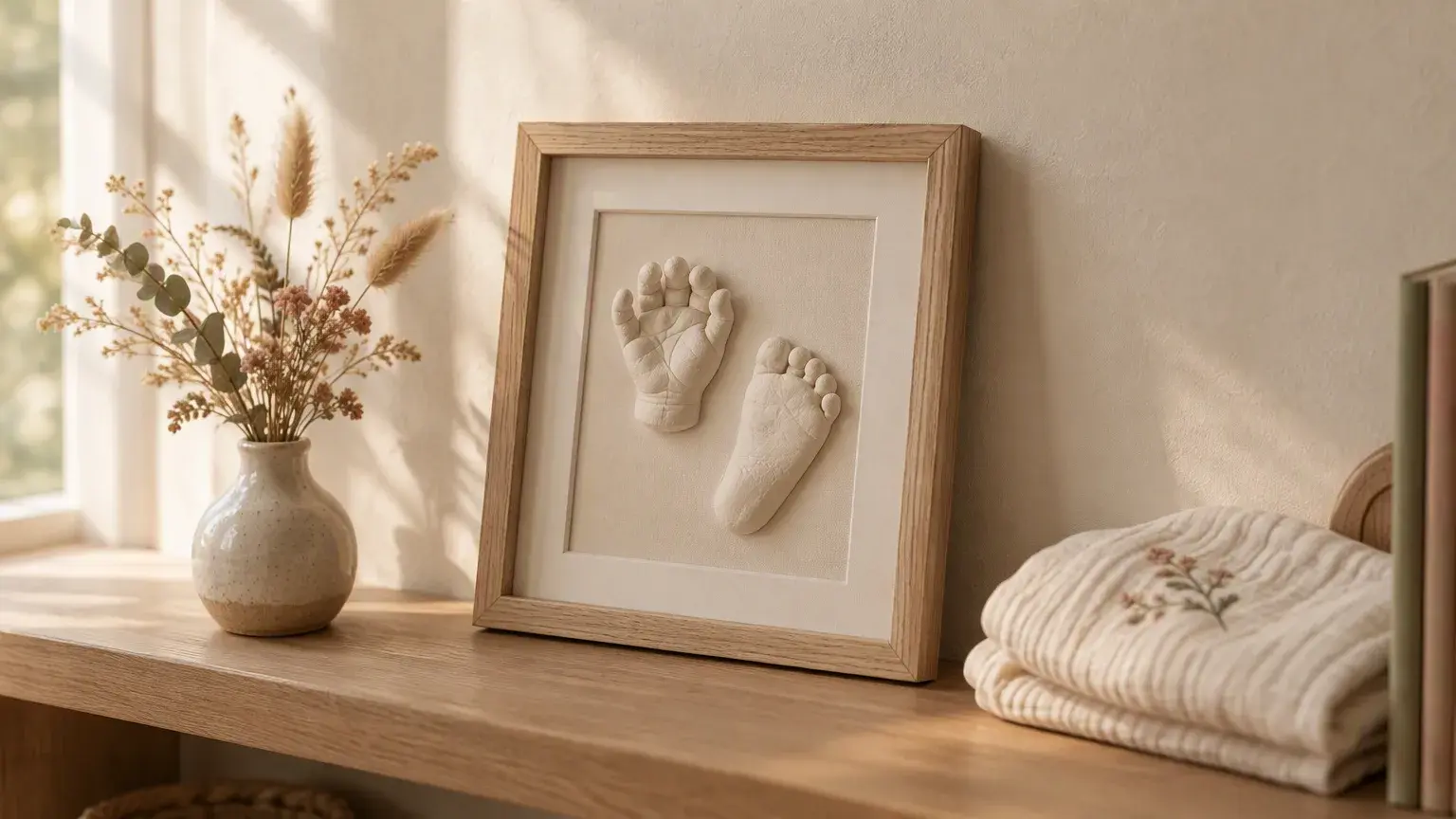
Plaster & Clay
The handprint in plaster: they’ll never be this small again
When my third son was a week old we pressed his palm into a handful of plaster. That hand is bigger than mine now — but the print is still a week old. Why plaster and clay make such tender keepsakes, and how to start at home.
· 3 min read
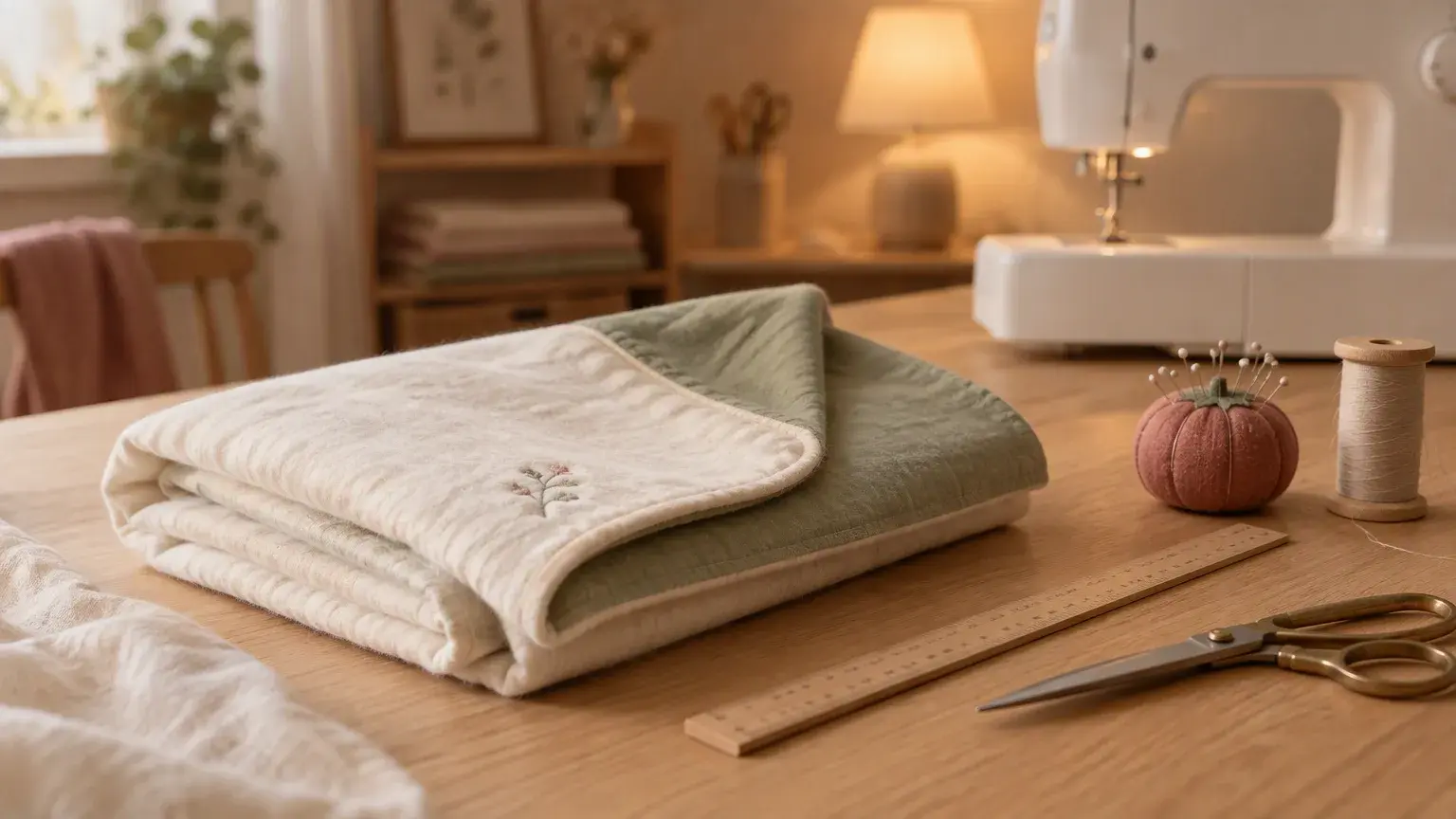
Sewing
A first-winter baby blanket: flannel and cotton, sewn in one evening
The blanket I sewed for Mehmet Emde’s first winter was two layers of fabric, four corners and one evening. Measurements, seam allowance, hand-finishing — and, first of all, where a blanket belongs and where it never does.
· 4 min read
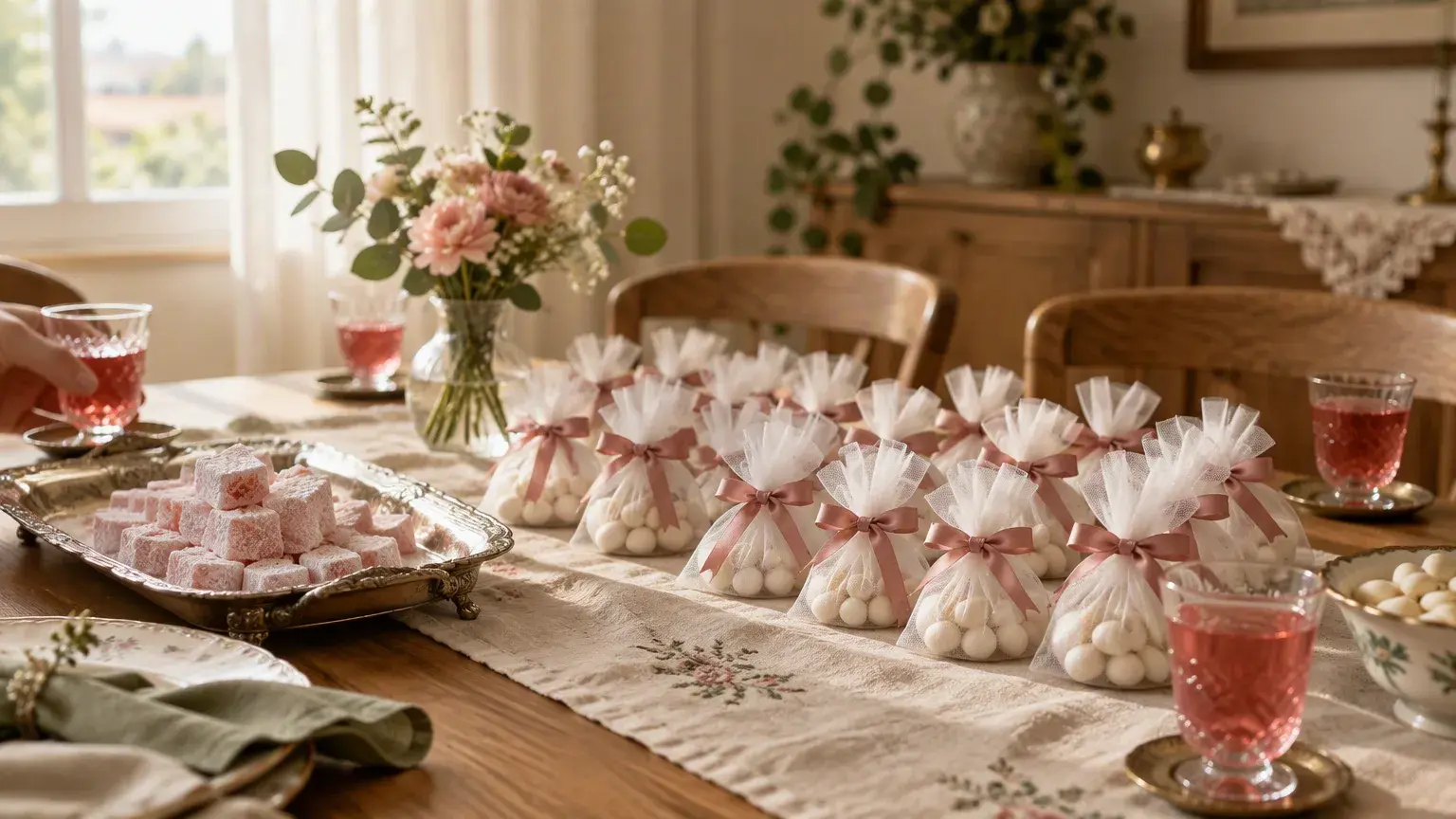
Customs & Traditions
Mevlit şekeri and tulle pouches: hosting a baby’s mevlit at home
Sugared almonds in tulle pouches, a tray of lokum, rose sherbet and a name on the nursery door. How my mother and Hamza Bera’s grandmother prepared his mevlit, who tied two hundred ribbons, and what I would tell a mother hosting one for the first time.
· 4 min read