Diş buğdayı: the Turkish first-tooth celebration, and a handful of wheat
In Anatolia a baby’s first tooth is celebrated with boiled wheat: neighbours are called, wheat is sprinkled over the baby’s head, and a row of objects is set out for them to reach for. At Muammer Esat’s diş buğdayı I found myself wondering where the custom comes from and what it still says to a mother today.
By Merve Çokal Doğan · · 4 min read
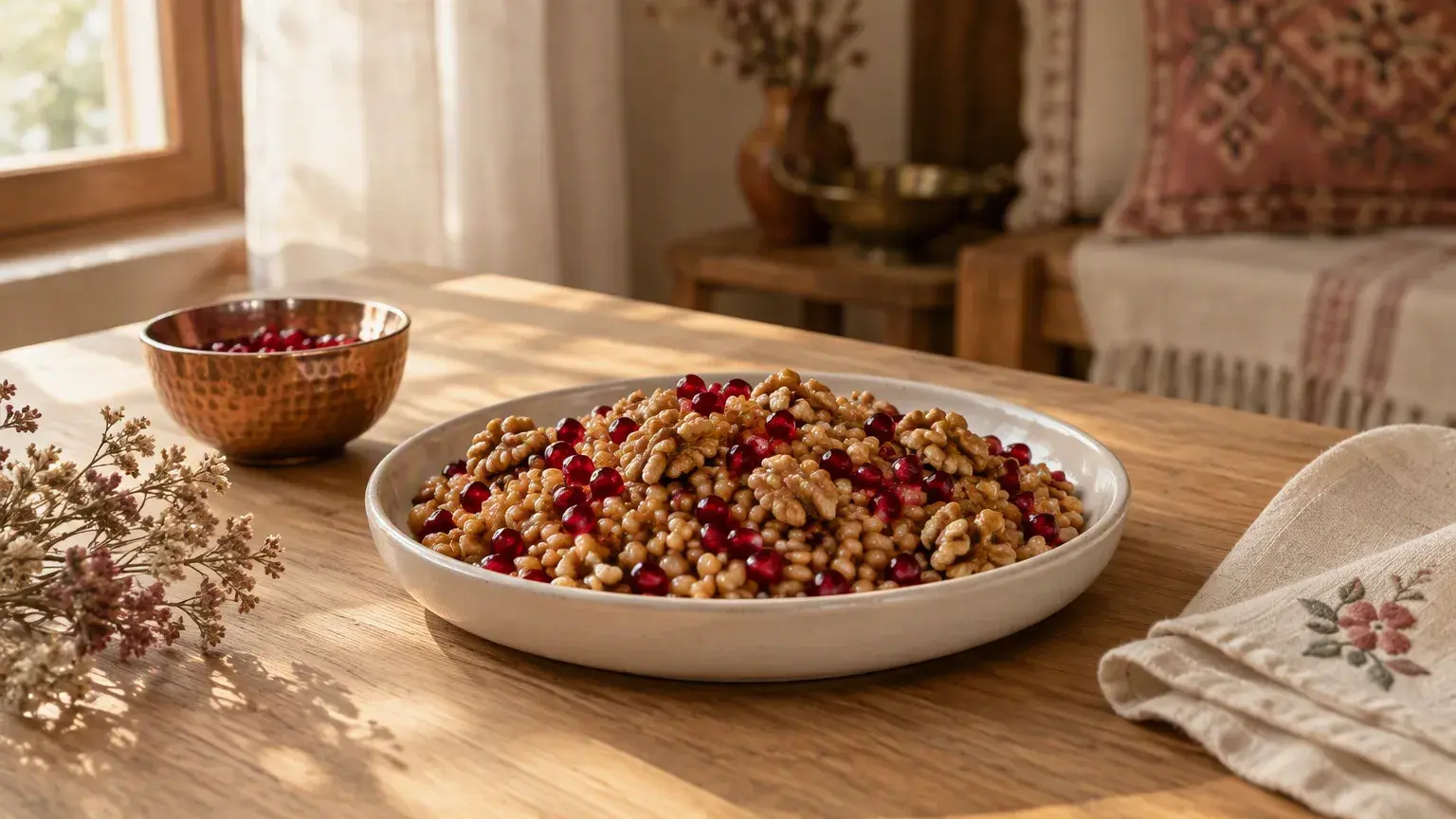
Muammer Esat’s first tooth came through on a Friday morning. I wasn’t the one who noticed; my mother was. In our flat in Konya she took him on her lap, drew his lower lip down with a finger and said, “It’s through.” Then, without pausing: “I’m soaking the wheat.”
I knew which wheat she meant, because I had seen the photograph of my own diş buğdayı: Zonguldak, a table, a small girl with grains of wheat in her hair. My four sisters have theirs too. Now it was my son’s turn.
Why wheat?
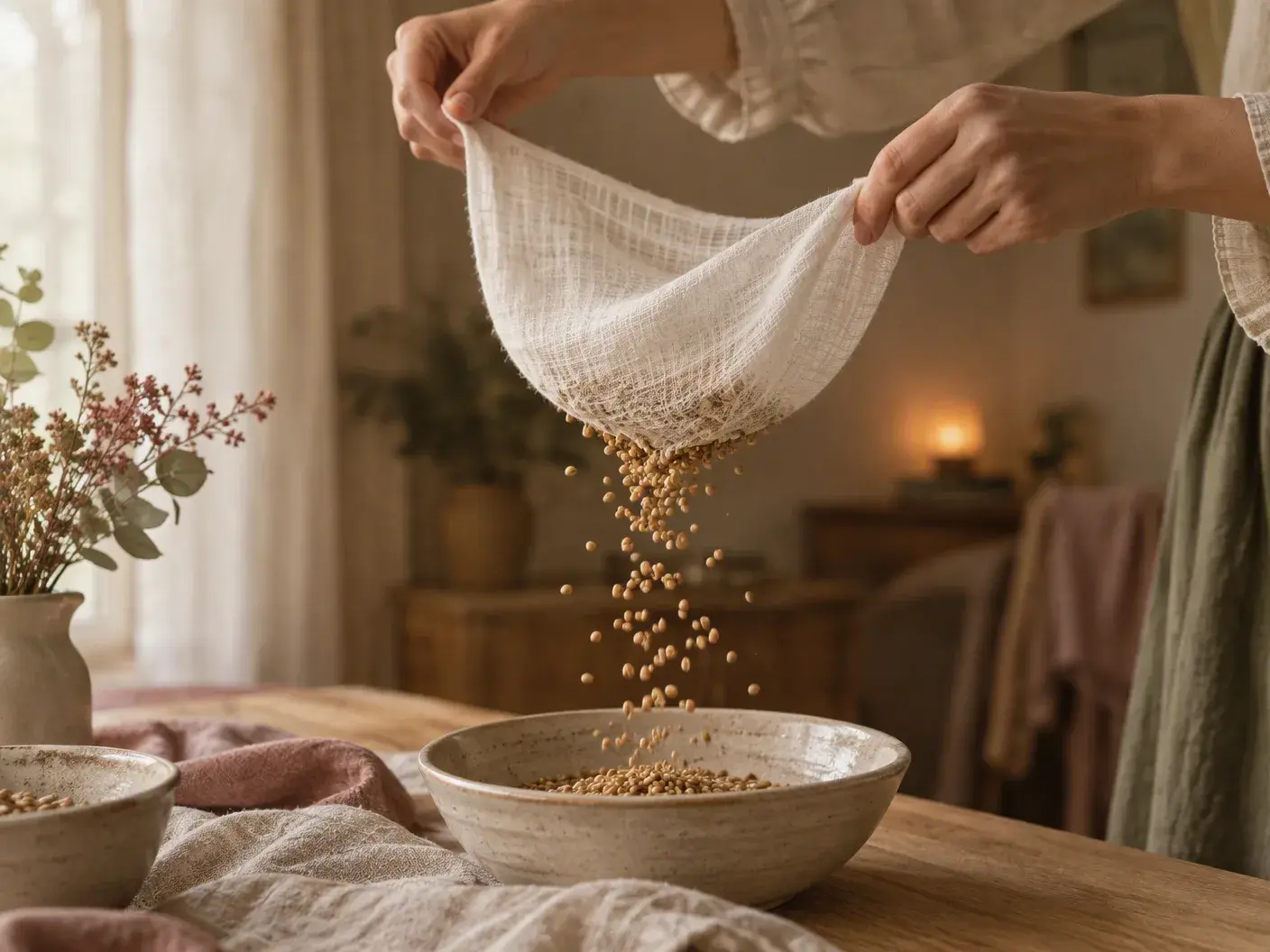
Across much of Anatolia a baby’s first tooth is marked with boiled wheat. The name shifts from region to region — diş buğdayı, diş hediği, diş aşı — but the shape is the same. Wheat is soaked overnight and boiled in the morning, then dressed with pomegranate seeds, walnuts, sugar, sometimes raisins. Neighbours are called. The baby is sat on a cloth and the wheat is sprinkled over their head through a fine muslin.
Why wheat? Because wheat multiplies. Plant one grain and you harvest an ear. With the first tooth, the old wish was that the child would multiply the same way — grow with abundance. And there is this: a tooth is the first sign that the baby will eat not only milk but “bread”. The wheat is that threshold itself.
The objects in a row
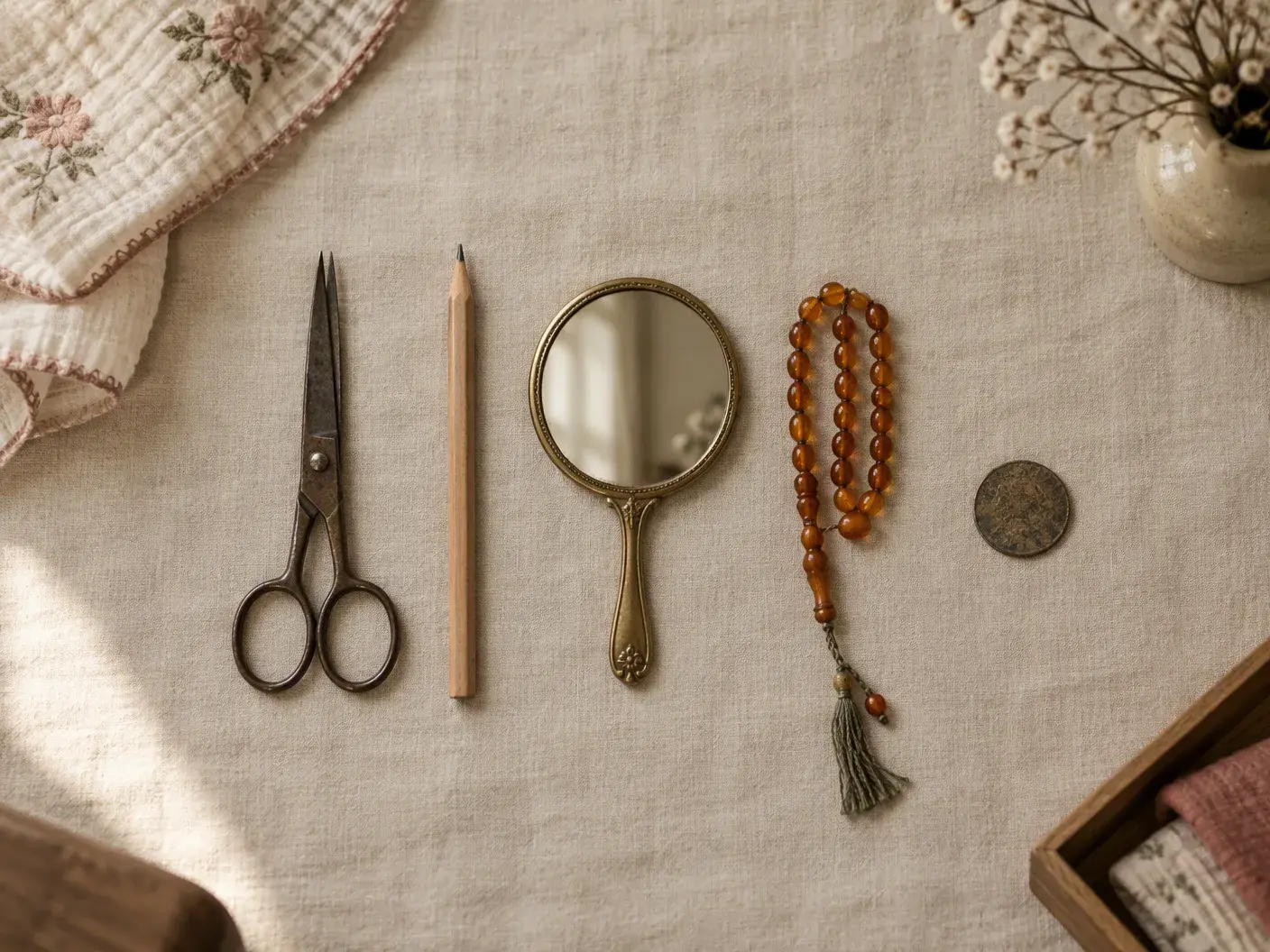
The best-loved part comes next. A few objects are laid in front of the baby: scissors, a pen, a mirror, a book, a string of prayer beads, a coin. Whichever they reach for is said to foretell them: scissors a tailor, the pen a scholar, the mirror beauty, the book learning.
Muammer Esat chose the pen. Then he put the pen down and reached for the pomegranate seeds. My mother laughed: “This one will find his own way.” He still does.
Nobody truly believes in the choice. But everybody watches, and everybody remembers. Because it is the first time a baby visibly chooses something. What matters is not the thing chosen but the choosing.
Why do we still do it?
I have thought about this a lot. After we moved to İstanbul we held diş buğdayı for Hamza Bera and Mehmet Emde as well — my mother far away, the neighbours barely known. We did it anyway.
I think it is because the first year is the one year in a mother’s life when nothing stands still. Every week something changes — weight, sleep, a sound, a length — and none of it is celebrated. Diş buğdayı is the one day in that restless year when everyone stops. The wheat soaks, a neighbour comes, the baby sits on the cloth, and for a moment everyone says: “Look — they’ve grown.”
We mark the fortieth day; we mark the first birthday. Between them lie six months. Diş buğdayı is the only feast in the middle.
How to do it at home
- Soak the wheat the night before. A glass of wheat berries under two fingers of water. In the morning simmer until soft; chickpeas can go in too.
- Dress it with what you have. Pomegranate seeds, walnut halves, raisins, a little sugar or cinnamon. None of it is compulsory — my mother’s had only pomegranate.
- Use a muslin. The wheat is not poured directly but sprinkled through a fine cloth, so nothing gets in the baby’s eyes or tangles in their hair.
- Choose the objects yourself. Scissors and a pen are classic, but a string of beads, a tape measure, a spoon — anything. The list doesn’t matter; the reaching does.
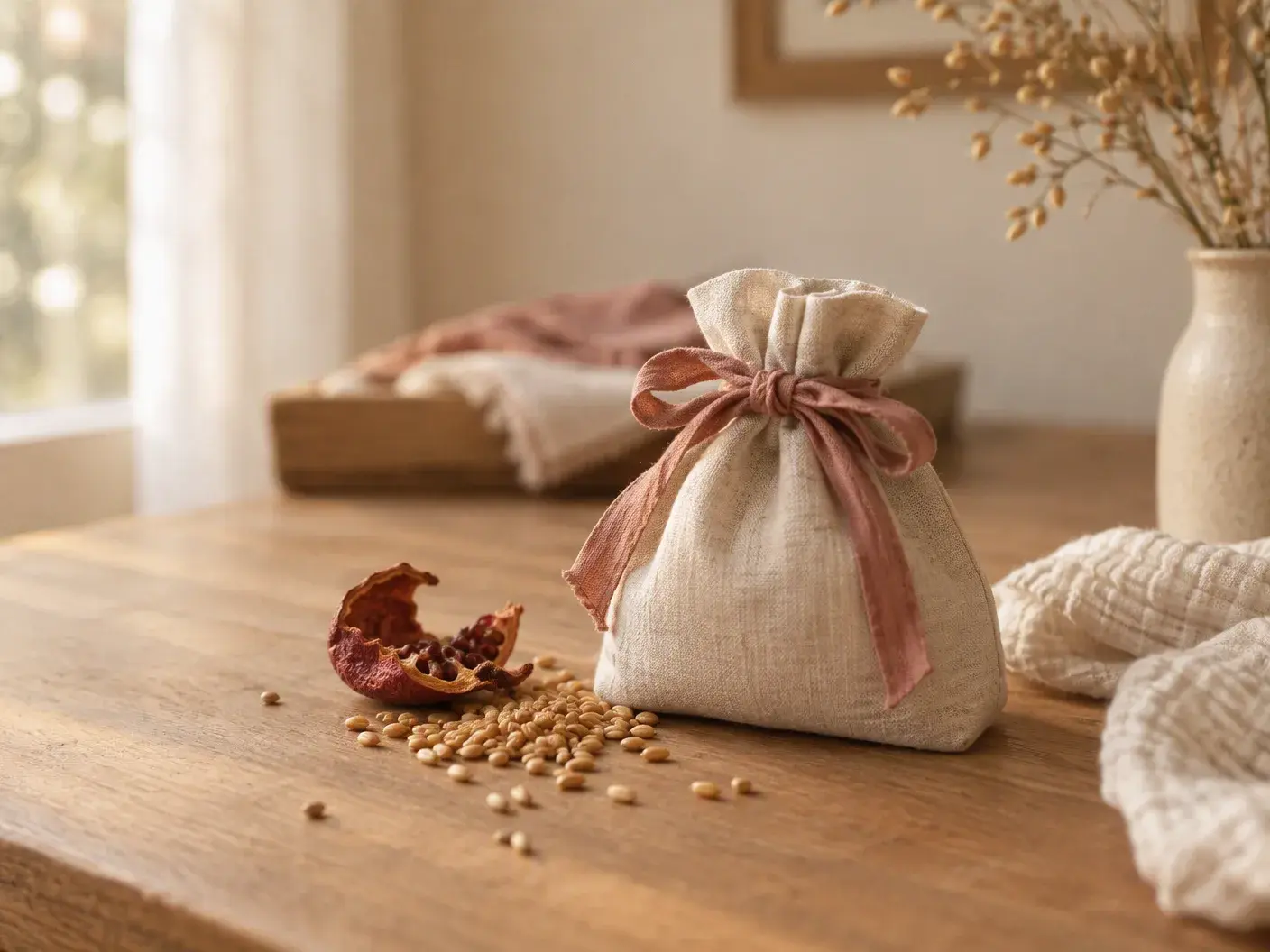
- Keep a handful of the wheat. Dry it and put it in a small cloth pouch. Years later that pouch will say more than the photograph.
What gets kept alongside the wheat
We keep a handful of the wheat; when the tooth itself falls out years later, we keep that too. The hospital band, the first curl, the first tooth. The small things of the first year all want a place, and too often that place is the corner of a drawer.
A smiling friend for little days
A cheerful mini dinosaur with their name on its chest brings a playful touch to the nursery.
Pomegranate seeds
Muammer Esat is grown now; he gets on well with pens and with pomegranates alike. In the photograph from his diş buğdayı he sits on a cloth with wheat in his hair, one hand stretched towards the red seeds. My mother’s voice is still in my ear: “This one will find his own way.” He did.
— Merve Çokal Doğan
Questions from readers
Mothers ask, we answer — questions under this story that others may have too.
Ask your own question
Ask the author anything about this story. We send a one-time code to your WhatsApp so real mothers, not bots, get answered — your number is never shown.
Keep reading
Customs & Traditions
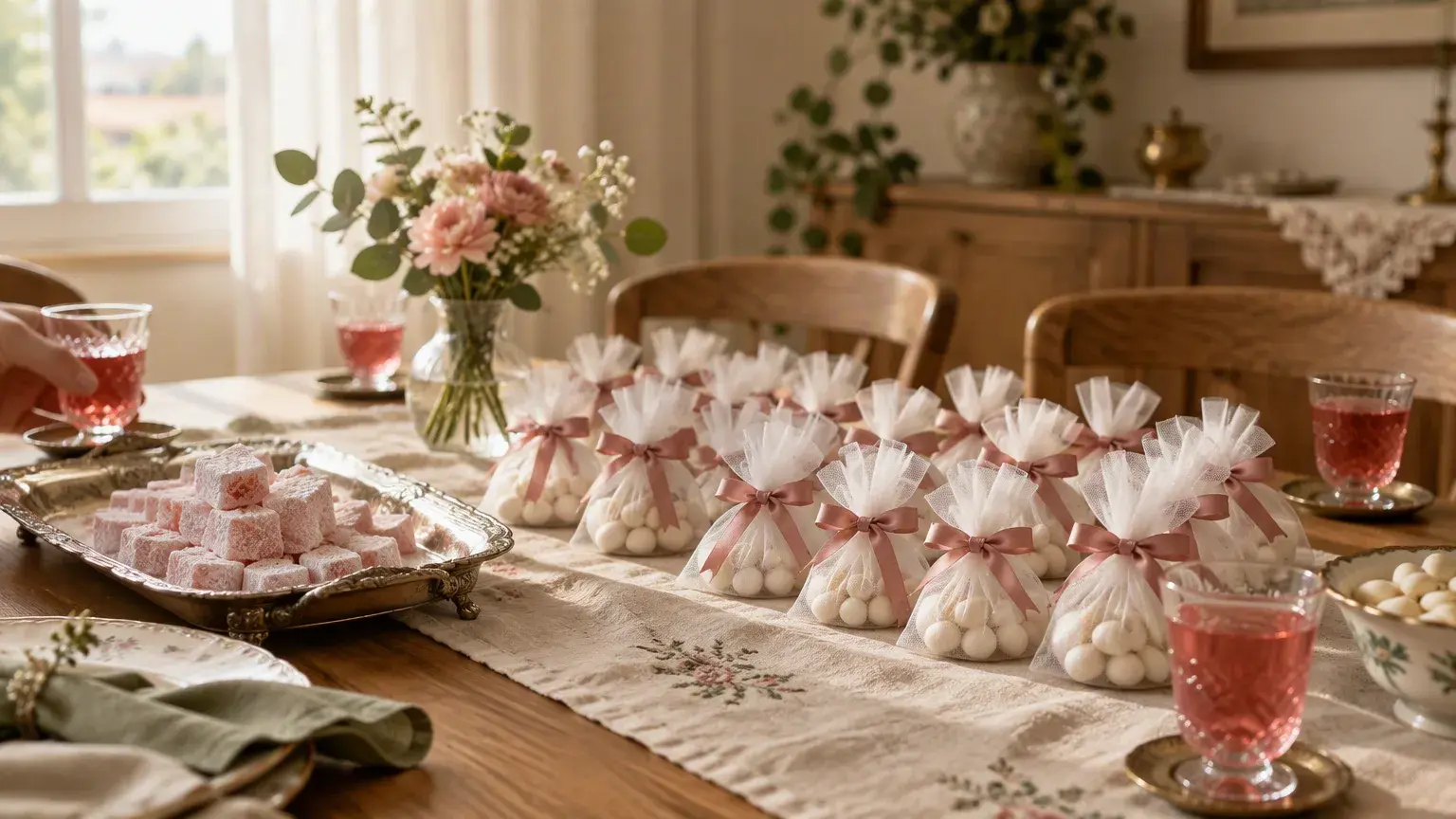
Mevlit şekeri and tulle pouches: hosting a baby’s mevlit at home
Sugared almonds in tulle pouches, a tray of lokum, rose sherbet and a name on the nursery door. How my mother and Hamza Bera’s grandmother prepared his mevlit, who tied two hundred ribbons, and what I would tell a mother hosting one for the first time.
· 4 min read
Customs & Traditions
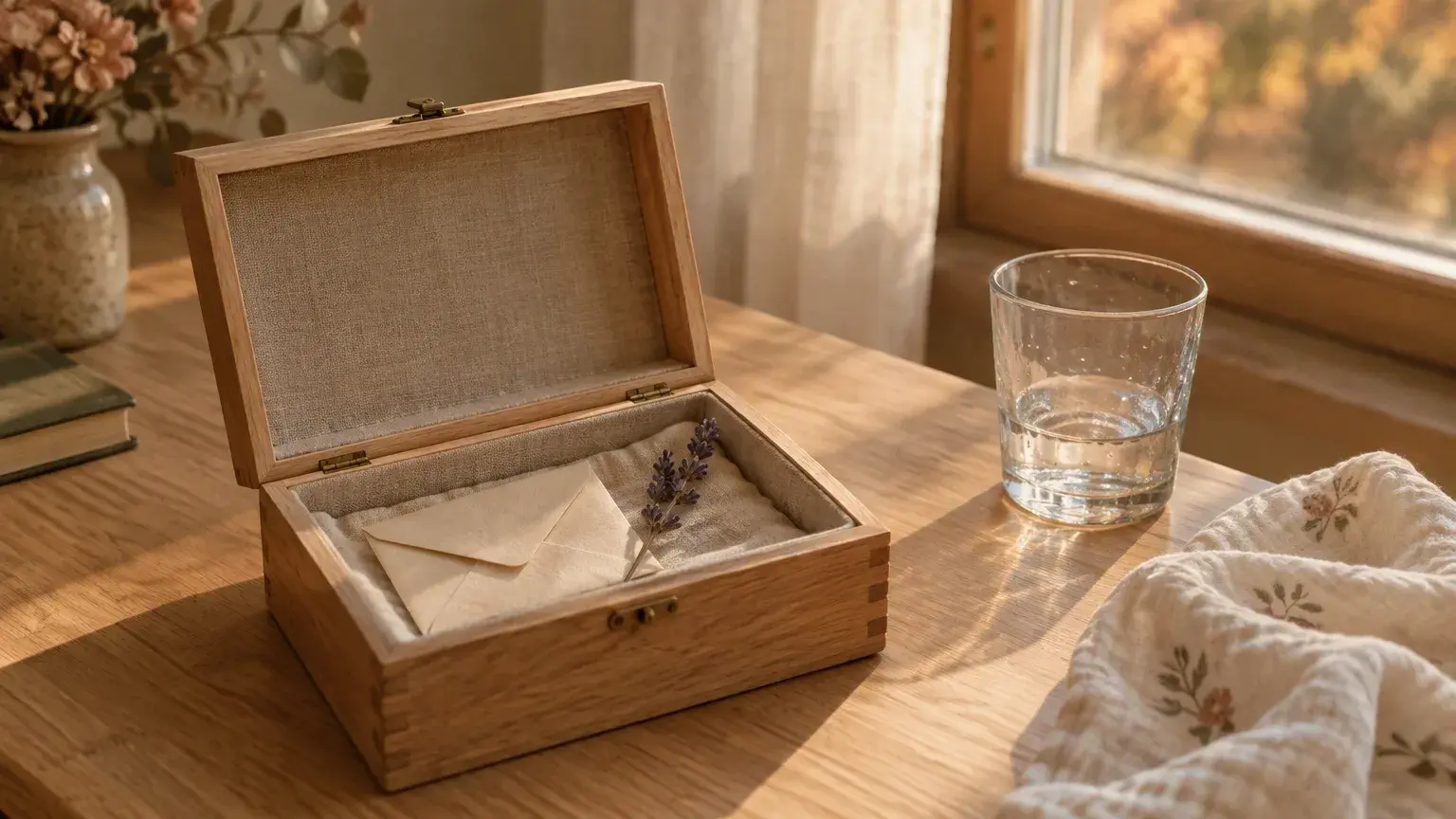
When the first milk tooth falls out: Turkish tooth customs, from the rooftop to a keepsake box
What did Turkish families do with a child’s first fallen milk tooth before the tooth fairy arrived — and what do they do now? The rooftop rhyme, the buried wish, and a small named box: what I learned from Süleyman Taha’s first tooth.
· 4 min read
Customs & Traditions
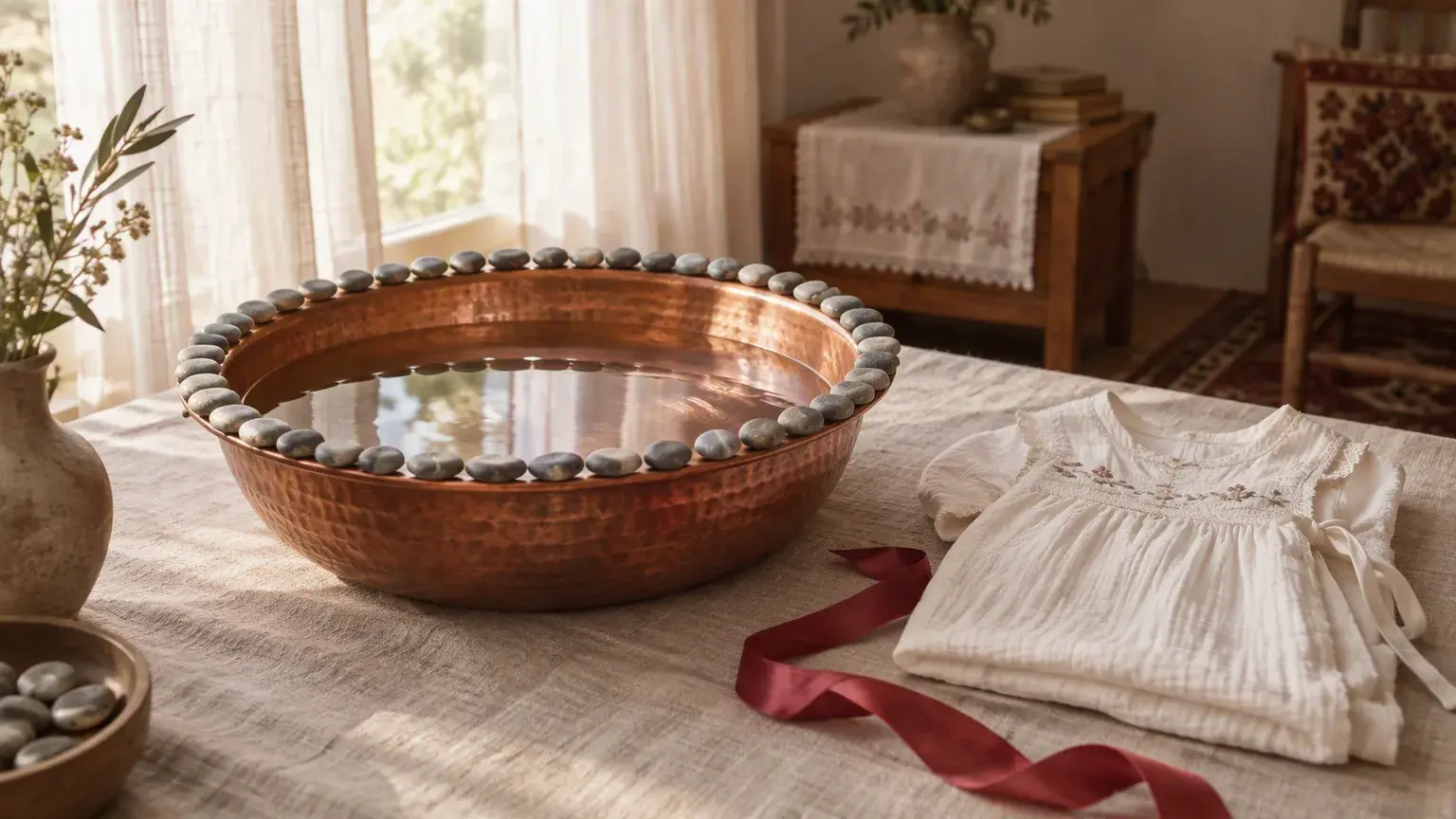
The first forty days: Türkiye’s oldest newborn customs, explained gently
A red ribbon on the door handle, a crimson sherbet for visitors, forty pebbles counted into a basin of water. In Anatolia a baby’s first forty days have always run on their own calendar. Where these customs come from, why families still keep them, and what a new mother — from here or elsewhere — can take from them.
· 4 min read